

Imagine a huge library where there are millions of books. I will ask you to find a book. Then tell me where you will find that one book among all those books? Or how long will it take to find your book? Maybe this task seems impossible to you. Database Management System is a librarian who stores all the information about your books in this database. After that information, you may not take much time to find the book and all the information stored in the database is secure.
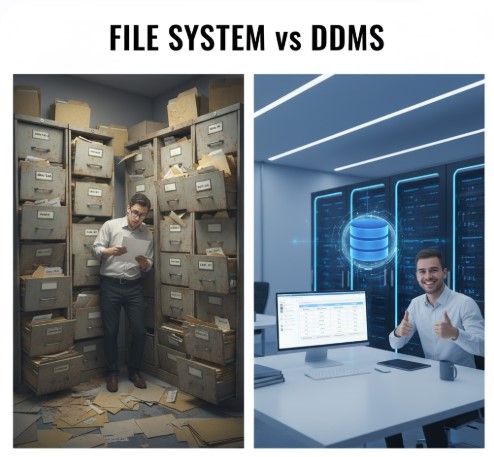
Table of Contents
ToggleWhat is DBMS?
A DBMS is a software system that is used to store, manage, retrieve, and control data. A DBMS not only stores data but also provides a way to use that data.
Advantage of DBMS
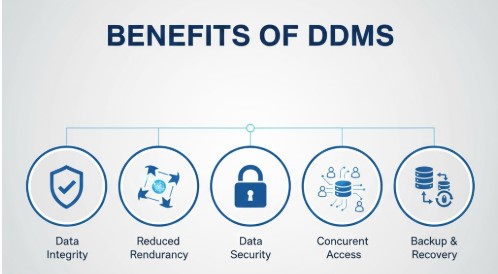
- Data Security: All information stored in DBMS is secure, there is no fear of hacking.
- Reduced Data Redundancy: If you have the same information stored repeatedly in your database, you can delete that duplicate data, which will greatly increase the space on your computer.
- Current Data Access: If you have given access to your database to someone else, you can store, delete, or update data at the same time.
- Backup & Restore: You can easily backup data in DBMS. If the system crashes for some reason, then data can be easily restored.
Example of DBMS
We use or work with various types of DBMS directly or indirectly in our daily lives:
- Relational DBMS (RDBMS): MySQL, PostSQL, Oracle, Microsoft SQL Server.
- Desktop: Microsoft Access.
- Non-SQL: MongoDB.
- Mobile Device: SQL Lite (Android, iOs used of apps).
Databases are the foundation of the digital age. From your Facebook profile to bank transactions, hospital patient records and online shopping, DBMSs are widely used in everything. All our data is stored, updated and protected in this DBMS.

