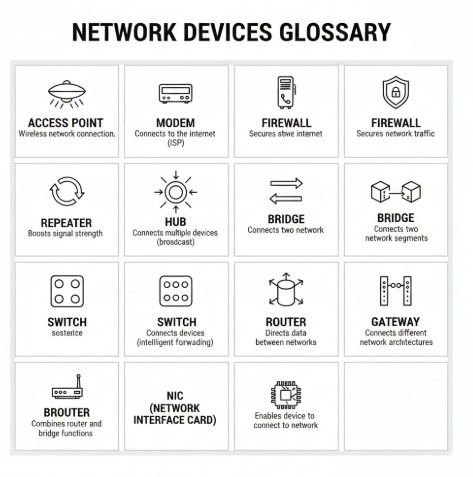
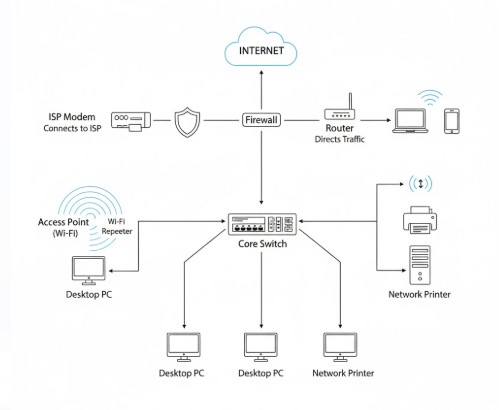
A network device is created through the combined coordination of numerous devices. In networking, each device has its own distinct function and importance.
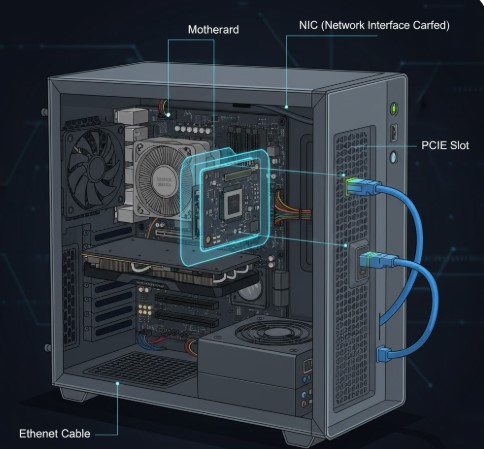
A NIC is a component of computer hardware that helps connect a computer to a network. Every NIC has a unique MAC address.
2. Modem
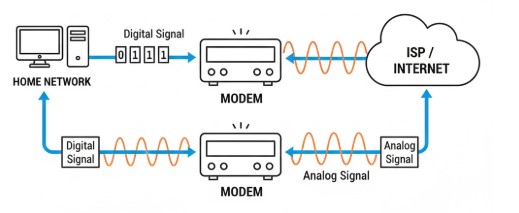
A modem creates a bridge between your network and your internet service provider. This device converts digital signals into analog signals.
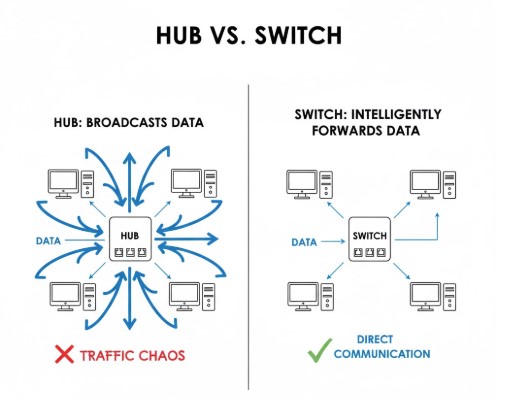
3. Hub
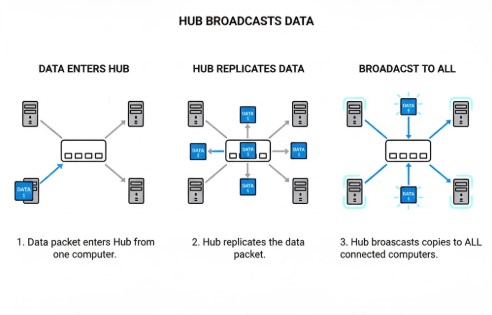
A hub is the most basic network device. It sends the data received on one port to all other ports. It is rarely used nowadays.
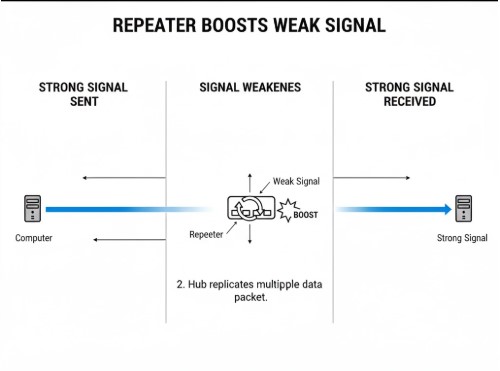
4. Repeater
When data is transmitted from one place to another, the data or signal may weaken after traveling a certain distance. A repeater is used to strengthen this weakened data. This increases network coverage.
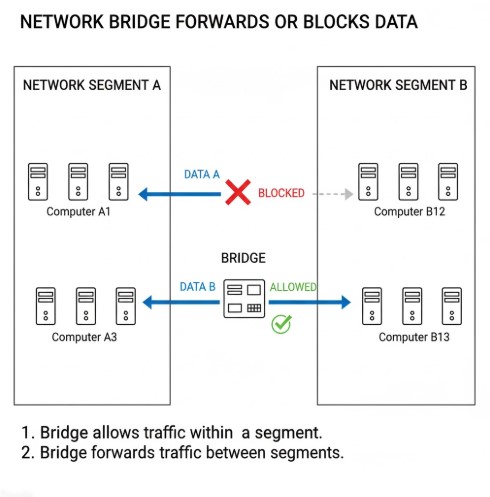
5. Bridge
A bridge is a network device that divides a network into separate segments. It uses MAC addresses to decide whether to forward data packets to another segment. This network device improves network performance by dividing collision domains.
6. Switch
A switch is a modern and intelligent alternative to a hub. It is a Layer 2 data link layer device. The switch learns the MAC addresses of the devices and sends data only to the port where the target device is connected. This increases network efficiency.
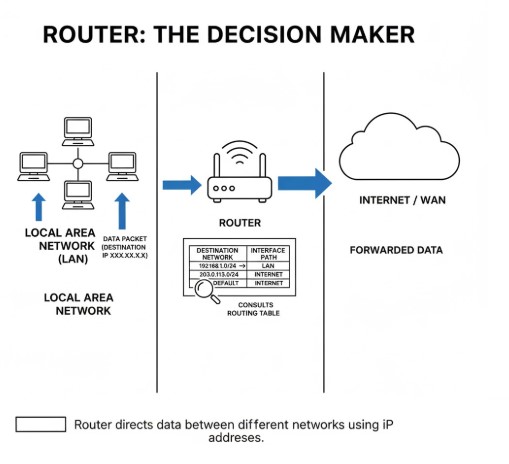
7. Router
This network device operates at layer 3 of the networking model. It connects different networks together (such as your LAN and the internet). It uses IP addresses to find the best route for data between two networks.
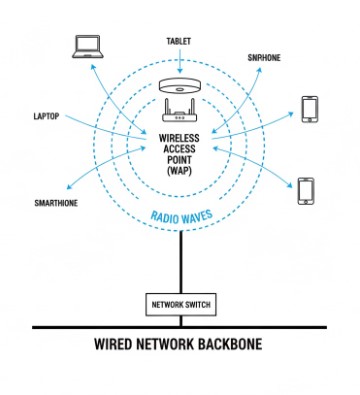
8. Access Point
An access point is used to create a wireless network or Wi-Fi. This device is typically connected to a switch and a router via a cable and then generates a wireless signal, allowing Wi-Fi devices to connect to the network.
9. Firewall
A firewall is a network security guard. It monitors network traffic and blocks or allows traffic according to security rules.
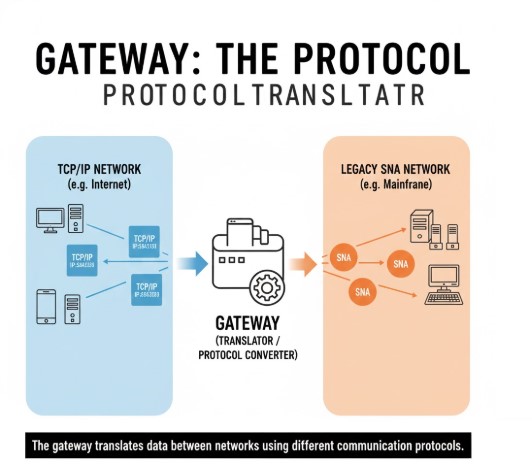
10. Gateway
This network device enables communication between devices that use different protocols, architectures, or data formats; the gateway makes this possible. This network device translates protocols. A router is an example of a gateway.
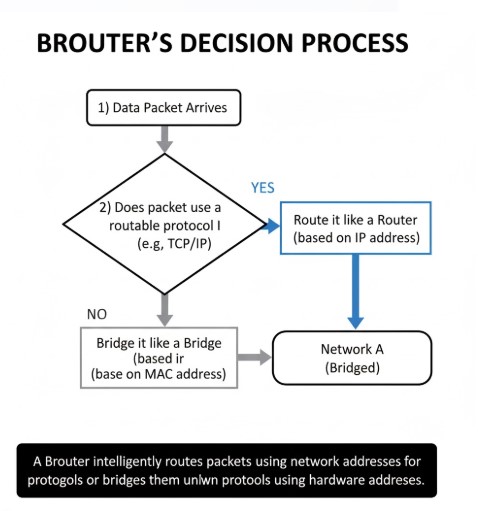
11. Brouter
This network device performs the functions of both a bridge and a router. If this network device recognizes a protocol, it will perform routing like a router. And if it doesn’t recognize the protocol, it will perform bridging like a bridge. Everything will be forwarded based on the MAC address.
Network devices, individually and collectively, have made our world of communication possible. Each device has a specific function.
Because of the coronavirus (Covid-19) outbreak, our in-person services are closed until further notice. You can subscribe to our newsletter below to get regular updates on our availability.